
Creando Rutinas Sensoriales Amigables en el Hogar
Practical tips for building daily routines that support your child’s sensory needs
Sensory processing differences can affect how a child responds to everyday activities like waking up, eating meals, getting dressed, or preparing for bedtime. Without consistent routines, these moments can become stressful for both children and caregivers.
Sensory-friendly routines help by:
- Providing predictability and reducing anxiety
- Supporting emotional and sensory regulation
- Encouraging independence and confidence
- Making transitions more manageable
When routines are aligned with a child’s sensory profile, daily life often feels calmer and more manageable for the whole family.
Understanding Your Child’s Sensory Needs
Every child has a unique sensory profile. Some children may be sensitive to noise, light, or touch, while others may seek movement, pressure, or sensory input throughout the day.
Observing patterns can be helpful. Notice:
- Which activities seem to trigger stress or overwhelm
- Times of day when regulation is harder
- Sensory input your child seeks or avoids
- Strategies that already help your child feel calm
Understanding these patterns allows routines to be designed proactively rather than reactively.
Why Sensory-Friendly Routines Matter
Sensory processing differences can affect how a child responds to everyday activities like waking up, eating meals, getting dressed, or preparing for bedtime. Without consistent routines, these moments can become stressful for both children and caregivers.
Sensory-friendly routines help by:
- Providing predictability and reducing anxiety
- Supporting emotional and sensory regulation
- Encouraging independence and confidence
- Making transitions more manageable
When routines are aligned with a child’s sensory profile, daily life often feels calmer and more manageable for the whole family.
Understanding Your Child’s Sensory Needs
Every child has a unique sensory profile. Some children may be sensitive to noise, light, or touch, while others may seek movement, pressure, or sensory input throughout the day.
Observing patterns can be helpful. Notice:
- Which activities seem to trigger stress or overwhelm
- Times of day when regulation is harder
- Sensory input your child seeks or avoids
- Strategies that already help your child feel calm
Understanding these patterns allows routines to be designed proactively rather than reactively.
Building Predictable Daily Routines
Consistency is key when creating sensory-friendly routines. Predictable schedules help children feel safe and prepared.
Helpful strategies include:
- Keeping wake-up, meal, and bedtime routines consistent
- Using visual schedules or simple checklists
- Breaking routines into clear, manageable steps
- Preparing your child ahead of transitions
Visual supports are especially helpful for children who process information more easily through images rather than verbal instructions.
Supporting Sensory Regulation Throughout the Day
Sensory regulation should be built into routines, not only addressed when challenges arise.
Examples include:
- Incorporating movement breaks throughout the day
- Offering calming sensory input like deep pressure or quiet time
- Allowing flexibility with clothing textures or food preferences
- Creating predictable moments for sensory activities
These supports help children stay regulated and engaged, reducing the likelihood of sensory overload.
Creating a Calm Sensory Space at Home
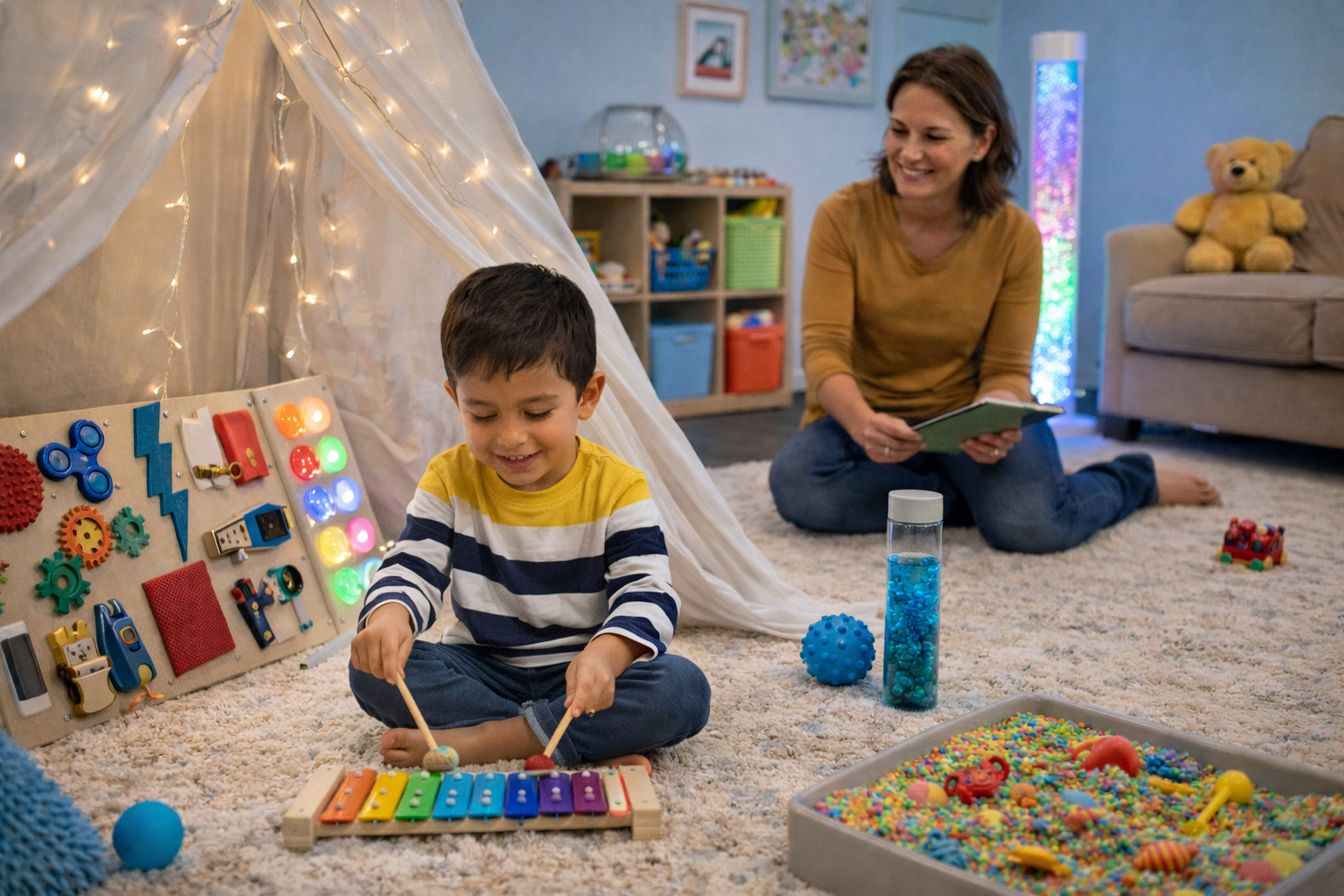
A designated sensory-friendly space can be a powerful part of a daily routine. This space does not need to be large or elaborate.
A sensory space may include:
- Soft lighting or natural light
- Comfortable seating, pillows, or weighted items
- Noise-reducing tools like headphones
- Preferred sensory items such as fidgets or calming visuals
This space can be used proactively or as a safe place to reset when emotions run high.
Adapting Routines as Your Child Grows
Sensory needs can change over time. What works one year may need adjustment the next.
Regularly reassessing routines helps ensure they continue to support your child’s development. Involving your child in routine planning when possible can also build independence and self-awareness.
Flexibility is just as important as consistency.
How Autism FIRST Supports Families
At Autism FIRST, we partner with families to support children across all environments, including the home. Our team understands how sensory needs impact daily life and works collaboratively with caregivers to develop practical, individualized strategies.
Whether through evaluations, therapy recommendations, or family guidance, we help parents create routines that support regulation, learning, and long-term growth.
Taking the Next Step
Creating sensory-friendly routines does not require perfection. Small, thoughtful changes can make a meaningful difference over time.
If your child struggles with daily routines or sensory regulation, support is available. Understanding your child’s sensory needs is a powerful step toward building a calmer, more supportive home environment.
Learn more about services and family support at Autism FIRST by visiting our website or contacting our team.